

The Ooh Tray is an organization that ambition is to share knowledge about Movie Production. Movie production is the process of bringing a story to life on screen through a combination of creativity, technology, and teamwork. It involves several stages — from developing a script and planning the shoot to...



Behind the Scenes: How Clean Sets Make Cinematic Magic
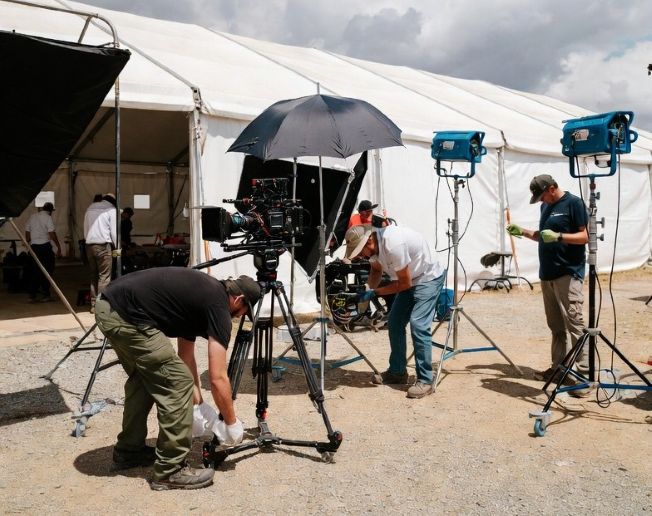
Visual storytelling relies on detail, and according to the American Society of Cinematographers, even subtle elements in a frame can shape how audiences interpret a scene before a character speaks. A dusty window, a streaked wall, a cluttered driveway, these aren’t just background choices. They quietly tell the viewer what kind of world they’ve stepped into. Cleanliness, or the lack of it, is part of the language of film.
Spend a day on a film set and you’ll notice something curious. Crews obsess over surfaces the way homeowners do before guests arrive. Floors are wiped, exteriors rinsed, props polished until they catch light just right. This level of precision mirrors professional home washing practices, where every inch is treated as part of a bigger visual story. Directors and production designers know that a spotless environment gives them control, control over lighting, tone, and mood.
Clean Spaces, Clear Vision
A clean set isn’t about perfection for its own sake. It’s about clarity. Cinematographers depend on predictable surfaces. Dirt scatters light in odd ways. Stains create unintended shadows. Even something as small as residue on glass can ruin a shot that took hours to set up. That level of control doesn’t happen by accident, it’s tied closely to planning and coordination, which is why film production scheduling and time management plays such a critical role in keeping every detail aligned. I once heard a crew member joke that “dust is the real villain of cinema,” and honestly, it’s not far off.
Think about exterior shots. Sunlight reflects differently on a freshly cleaned wall versus one layered with grime. That reflection affects exposure, color balance, and even how actors appear on screen. When surfaces are clean, the camera captures what it’s supposed to, not random distractions.
The Home Maintenance Parallel
There’s a surprising overlap between film set prep and everyday exterior care. Both rely on consistency, attention to detail, and a bit of patience. When homeowners invest in regular exterior maintenance, they’re essentially doing what film crews do, preparing a space to look its best under any lighting condition.
Pressure washing, for example, removes buildup that dulls surfaces. In filmmaking, that same buildup would flatten a scene’s visual depth. Clean textures create contrast. Contrast creates interest. It’s a simple chain reaction, but it matters.
And let’s be real, nobody wants their house to look like an abandoned movie set unless that’s the vibe they’re going for.
Lighting Loves Clean Surfaces
Lighting is where the magic really happens. Directors of photography spend hours shaping light, bouncing it, diffusing it, tweaking it. But all that effort can fall apart if the environment isn’t clean.
Clean surfaces reflect light evenly. That means fewer surprises during filming. Shadows behave as expected. Highlights don’t blow out unpredictably. It’s like giving the lighting team a reliable canvas.
In contrast, dirty or uneven surfaces create noise. Not the audio kind, but visual clutter. It distracts the viewer, even if they don’t consciously notice it. And in storytelling, distraction is the enemy.
Real-World Examples from Film
Consider the production of “Parasite,” directed by Bong Joon-ho. The film’s iconic house was meticulously designed and maintained to reflect wealth and control. Every surface was pristine. That cleanliness wasn’t accidental. It reinforced the story’s themes of order and hidden tension.
Or take “The Great Gatsby,” where Baz Luhrmann’s team crafted dazzling, polished environments. The shine of floors, the gleam of windows, everything contributed to the film’s opulent feel. Without that level of upkeep, the illusion would crack.
Even grittier films rely on controlled cleanliness. Sets that look messy are often carefully arranged. Dirt is placed, not left to chance. It’s a funny paradox. What looks chaotic is actually highly managed.
Framing and First Impressions
Clean environments help directors frame shots with confidence. When the background is visually consistent, the focus stays where it should be, on the characters and the story. It’s the same principle homeowners notice after a thorough exterior cleaning. Suddenly, architectural details pop. Colors feel richer. The whole space looks more intentional.
There’s also a psychological effect. People associate cleanliness with care and quality. In film, that translates to credibility. If a setting feels authentic, audiences are more likely to stay immersed.
Bringing It Back Home
Here’s the takeaway. The same care that goes into preparing a film set can elevate everyday spaces. Regular exterior cleaning isn’t just about curb appeal. It shapes how a place is experienced, whether by guests, neighbors, or even through photos.
Think of your home as a frame in a film. What story does it tell at first glance? A well-maintained exterior suggests warmth, pride, maybe even a bit of quiet confidence. And just like in cinema, those first impressions matter more than we think.
In the end, cinematic magic doesn’t start with cameras or actors. It starts with the environment. Clean, intentional, and ready to be seen. Whether it’s a blockbuster set or a suburban driveway, the principle holds. A thoughtful approach to exterior care, much like professional home washing techniques, can transform the ordinary into something quietly extraordinary.
So next time you watch a film and admire the setting, remember, someone probably spent hours making sure it was spotless. And maybe, just maybe, your own space deserves a little of that behind-the-scenes magic too, starting with something as simple as exterior cleaning done right.
The Ooh Tray
http://bing.com
Behind the Scenes: How Clean Sets Make Cinematic Magic
Visual storytelling relies on detail, and according to the American Society of Cinematographers, even subtle elements in a frame can shape how audiences interpret a scene before a character speaks. A dusty window, a streaked wall, a cluttered driveway, these aren’t just background choices. They quietly tell the viewer what kind of world they’ve stepped into. Cleanliness, or the lack of it, is part of the language of film.
Spend a day on a film set and you’ll notice something curious. Crews obsess over surfaces the way homeowners do before guests arrive. Floors are wiped, exteriors rinsed, props polished until they catch light just right. This level of precision mirrors professional home washing practices, where every inch is treated as part of a bigger visual story. Directors and production designers know that a spotless environment gives them control, control over lighting, tone, and mood.
Clean Spaces, Clear Vision
A clean set isn’t about perfection for its own sake. It’s about clarity. Cinematographers depend on predictable surfaces. Dirt scatters light in odd ways. Stains create unintended shadows. Even something as small as residue on glass can ruin a shot that took hours to set up. That level of control doesn’t happen by accident, it’s tied closely to planning and coordination, which is why film production scheduling and time management plays such a critical role in keeping every detail aligned. I once heard a crew member joke that “dust is the real villain of cinema,” and honestly, it’s not far off.
Think about exterior shots. Sunlight reflects differently on a freshly cleaned wall versus one layered with grime. That reflection affects exposure, color balance, and even how actors appear on screen. When surfaces are clean, the camera captures what it’s supposed to, not random distractions.
The Home Maintenance Parallel
There’s a surprising overlap between film set prep and everyday exterior care. Both rely on consistency, attention to detail, and a bit of patience. When homeowners invest in regular exterior maintenance, they’re essentially doing what film crews do, preparing a space to look its best under any lighting condition.
Pressure washing, for example, removes buildup that dulls surfaces. In filmmaking, that same buildup would flatten a scene’s visual depth. Clean textures create contrast. Contrast creates interest. It’s a simple chain reaction, but it matters.
And let’s be real, nobody wants their house to look like an abandoned movie set unless that’s the vibe they’re going for.
Lighting Loves Clean Surfaces
Lighting is where the magic really happens. Directors of photography spend hours shaping light, bouncing it, diffusing it, tweaking it. But all that effort can fall apart if the environment isn’t clean.
Clean surfaces reflect light evenly. That means fewer surprises during filming. Shadows behave as expected. Highlights don’t blow out unpredictably. It’s like giving the lighting team a reliable canvas.
In contrast, dirty or uneven surfaces create noise. Not the audio kind, but visual clutter. It distracts the viewer, even if they don’t consciously notice it. And in storytelling, distraction is the enemy.
Real-World Examples from Film
Consider the production of “Parasite,” directed by Bong Joon-ho. The film’s iconic house was meticulously designed and maintained to reflect wealth and control. Every surface was pristine. That cleanliness wasn’t accidental. It reinforced the story’s themes of order and hidden tension.
Or take “The Great Gatsby,” where Baz Luhrmann’s team crafted dazzling, polished environments. The shine of floors, the gleam of windows, everything contributed to the film’s opulent feel. Without that level of upkeep, the illusion would crack.
Even grittier films rely on controlled cleanliness. Sets that look messy are often carefully arranged. Dirt is placed, not left to chance. It’s a funny paradox. What looks chaotic is actually highly managed.
Framing and First Impressions
Clean environments help directors frame shots with confidence. When the background is visually consistent, the focus stays where it should be, on the characters and the story. It’s the same principle homeowners notice after a thorough exterior cleaning. Suddenly, architectural details pop. Colors feel richer. The whole space looks more intentional.
There’s also a psychological effect. People associate cleanliness with care and quality. In film, that translates to credibility. If a setting feels authentic, audiences are more likely to stay immersed.
Bringing It Back Home
Here’s the takeaway. The same care that goes into preparing a film set can elevate everyday spaces. Regular exterior cleaning isn’t just about curb appeal. It shapes how a place is experienced, whether by guests, neighbors, or even through photos.
Think of your home as a frame in a film. What story does it tell at first glance? A well-maintained exterior suggests warmth, pride, maybe even a bit of quiet confidence. And just like in cinema, those first impressions matter more than we think.
In the end, cinematic magic doesn’t start with cameras or actors. It starts with the environment. Clean, intentional, and ready to be seen. Whether it’s a blockbuster set or a suburban driveway, the principle holds. A thoughtful approach to exterior care, much like professional home washing techniques, can transform the ordinary into something quietly extraordinary.
So next time you watch a film and admire the setting, remember, someone probably spent hours making sure it was spotless. And maybe, just maybe, your own space deserves a little of that behind-the-scenes magic too, starting with something as simple as exterior cleaning done right.
Behind the Scenes: Why First-Responder Discounts Count in Hollywood Film Production
The film business is a business of teamwork, time, and trust. The secret behind a successful shoot is well-coordinated work to guarantee safety, continuity and efficiency. The importance of community support is obvious in this high-pressure case. This applies especially when it goes beyond the set. Savings programs such as Lifesaver Savings – first responder discounts demonstrate how the values of emergency workers will come naturally in support of the requirements and interests inherent in the movie business.
Safety as a Shared Priority
All the production, independent or large-scale, is dependent on emergency preparedness. First responders are crucial in ensuring that no one is in danger of the set filming, events, and set crowds. They have the benefit of moving the productions forward with confidence. This is for the purpose of being assisted in case something goes wrong.
Access to Lifesaver Savings – First Responder Discounts
Busy professionals require access to a discount program like the Lifesaver Saving. This is because safety professionals are key players supporting the larger creative ecosystem. It applies even when they are not directly engaged in the production itself.
The Long Hours Behind The Camera
Similar to first responders, film crews have long and erratic schedules. Overnight shoots, early call times and physically demanding days are the order of the day. This experience builds an intuition between the film industry and emergency professionals.

Discount schemes are also useful in alleviating the day-to-day costs of the community guardians. Thus, it enables them to concentrate on their duties rather than to spend unwarranted funds on financial matters. It’s just like budgeting is essential in maintaining production time.
Monetary Assistance as an Appreciation
The recognition is not necessarily in the form of applause, or awards. In other cases, it is manifested by practical assistance. Lifesaver Savings – first responder discounts are hard benefits that are not symbolic but are their true appreciation.
These programs help in saving money in daily expenses so that responders can invest in rest. Aside from that, they can also recover and have some personal time. These are crucial factors in maintaining high-performance jobs.
The Online Access in a Rapid World
The current generation productions are extensively based on digital tools to control the schedules, logistics, and cooperation. Similarly, centralized discount platforms will make it easier to access legitimate savings to first responders.
Reliable and easy navigation to accessing discounts is desirable in any professional setting of a film, where time and clarity are paramount.
Stories, Heroes, and Real-Life Effect
Through film, the heroes are usually dramatized. But in life, those who are real are more than those on screen. The gap between the cinematic narration and the real life impact is bridged through the discount programs. The programs provide support that directly enhances the life of those who serve in their day to day lives.
This relationship supports the notion that the process of storytelling is not simply a method of entertainment. It it also a reflection of moral principles like bravery, altruism, and appreciation.
The Craft of Making Things Matter
The articles about filmmaking techniques, production issues, and narrative structure give some knowledge about how listeners are actually told to motivate the audience. Knowing these behind-the-scenes factors makes it even more enjoyable to understand. So, the creative industries acknowledge and celebrate real-life service both in art and action.
Conclusion
Discounted first responders are unobtrusive yet potent types of appreciation. The program such as Lifesaver Savings – first responder discounts fits the value system of the industry very well. It is to consider the given safety, collaboration, and commitments are paramount in the field of film production. Such initiatives provide practical and sustainable support by making the recognition of service far bigger than the screen. And, it has a lasting effect where it can make a difference.
Movie Production and the Rise of Cult Classic Content
 Movie production continues to evolve as new tools, platforms, and audience habits shape the way stories are made and shared. Yet one thing remains constant: people love films that speak to them on a deeper level. Some movies fade over time, while others build a loyal group of fans who treat the film as something special. These films are called cult classic content, and they have a unique place in entertainment. They often start small but grow into something much larger than expected. They also show how powerful creative storytelling can be, even without big budgets or major marketing pushes.
How Movie Production Has Changed
Movie production used to follow a long and expensive path. Studios needed large teams, heavy equipment, and major distributors to reach viewers. Today, filmmakers have more options. Digital cameras, editing software, and online platforms have opened the doors to creators who want to share their stories without waiting for studio approval.
Smaller crews and independent teams now make films that reach global audiences. Production is faster and more flexible. Film budgets can range from large studio projects to small independent films funded by online supporters. Because of this change, more unique stories are finding their place in the market. Audiences now choose from a wider range of genres, styles, and ideas.
Streaming services have also changed how films are made. Producers now think about the viewing experience on phones, tablets, and home screens. This shift pushes them to adapt techniques that fit modern habits, such as shorter runtimes or tighter storytelling. These changes give creators more control but also more responsibility. They must make content that stands out in a crowded space.
What Makes a Cult Classic?
A cult classic is usually a movie that did not start as a huge success. Sometimes it even struggled at the box office. But over time, it gained a loyal fan base. Fans watch it again and again. They quote lines from the movie. They share it with friends. Some even dress up as characters during special screenings.
There is no exact formula for creating a cult classic. Many of them become popular because they offer something different. They may have strange characters, unusual storylines, or a bold visual style. They may break rules or take risks that big studios avoid. This gives them charm and personality.
Cult classics also succeed because they feel real. They show ideas that are not always found in mainstream films. They may deal with themes that speak to specific groups of people. These viewers feel seen and understood. The movie becomes more than entertainment. It becomes part of their identity.
Some famous cult classics include “The Rocky Horror Picture Show,” “Donnie Darko,” “Pulp Fiction,” and “The Big Lebowski.” Each has a strong fan culture. Fans gather at events, join online groups, and create art inspired by these films. The community that forms around a cult classic can be as important as the film itself.
How Cult Classics Influence Modern Movie Production
Cult classics have reshaped movie production in many ways. They show that not every film needs to follow a safe formula. Risky ideas and unusual stories can still find an audience. Producers and writers now look at cult classics for inspiration. They study what made these films stand out.
Independent filmmakers often follow the path set by cult classics. They experiment with style, tone, and storytelling. They work with smaller crews and push creative freedom. This approach allows them to produce movies with strong personalities. These films may not appeal to everyone, but they connect deeply with a specific group.
Studios have also taken notice. They now create films with cult potential. They invest in bold scripts and niche genres. They also bring back older cult classics through remakes, sequels, and special releases. This creates new interest and keeps the legacy alive.
Cult classics have also influenced marketing. Producers now focus on community-building. They release behind-the-scenes clips, interactive posts, and fan events. They want viewers to feel involved. A strong fan base can drive success long after a movie’s release.
Why People Still Seek Cult Content
People enjoy cult content because it feels personal. These films do not try to please everyone. They allow viewers to enjoy something rare and different. Fans appreciate the honesty and creativity behind cult classics. They also love the sense of connection with others who feel the same way.
In a world full of fast content, cult classics remind people to slow down and enjoy something meaningful. They show that great stories do not need big budgets. They need passion and vision.
Cult content also thrives online. Social media makes it easy for fans to share opinions, scenes, and reactions. This builds excitement and keeps even older films relevant. New generations discover these films through memes, clips, and recommendations.
As long as audiences value originality, cult content will continue to grow. It represents the heart of filmmaking: creativity, risk, and authentic storytelling.
Film Production Scheduling and Time Management
Time is one of the most valuable resources. Film production scheduling and time management are essential for keeping a project organized, efficient, and within budget. Proper scheduling ensures that every scene is filmed at the right time and place, while good time management helps the crew meet deadlines without compromising quality. Together, these factors determine whether a movie is completed smoothly or faces costly delays.
The Role of Producers in Managing Film Projects
Producers are the backbone of every film project. They oversee the entire production process — from developing the idea to distributing the finished movie. While directors handle the creative side, producers manage the business, logistics, and organization. Their leadership ensures that the film is completed on time, within budget, and up to the desired quality.
The Impact of Sound Design and Music in Movies
Sound design and music play a vital role in shaping the emotional and sensory experience of a movie. While visuals capture the audience’s attention, sound gives the story depth, realism, and emotional power. From subtle background noises to dramatic musical scores, sound enhances storytelling by guiding audience reactions and bringing scenes to life.
The Importance of Cinematography in Storytelling
Cinematography is the art of capturing a story through the camera lens. It involves the careful use of lighting, camera angles, movement, framing, and color to visually communicate emotions and ideas. More than just recording scenes, cinematography shapes how audiences experience the story — turning words and performances into powerful images that stay in the mind long after the movie ends.
How Scriptwriting Influences the Success of a Movie
Scriptwriting is the foundation of every movie. It provides the story, characters, and dialogue that guide the entire production process. A well-written script captures the audience’s emotions, builds tension, and delivers meaning — all of which determine whether a movie will connect with viewers and achieve success.
The Role of the Director in Shaping a Film’s Vision
The director is often considered the creative leader of a film. From concept to final cut, the director’s vision shapes how the story is told, how the audience feels, and how every visual and emotional detail comes together. A film’s success largely depends on how effectively the director guides the artistic and technical teams to bring the script to life.
The Stages of Movie Production: From Pre-Production to Post-Production
Movie production is a complex and collaborative process that transforms an idea into a visual masterpiece on screen. It involves careful planning, creative vision, and technical expertise across several stages. Understanding these stages helps filmmakers organize their workflow, manage resources efficiently, and ensure a smooth transition from concept to final cut.